
Peptides, Looksmaxxing and Social Media, Why Everyone Suddenly Knows About Retatrutide, GHK-Cu and MT2
A few years ago, peptides were still a pretty niche topic. Unless you were deep into bodybuilding forums, anti ageing circles or underground performance communities, most people had never even heard the word. Fast forward to now and it feels like peptides are everywhere.
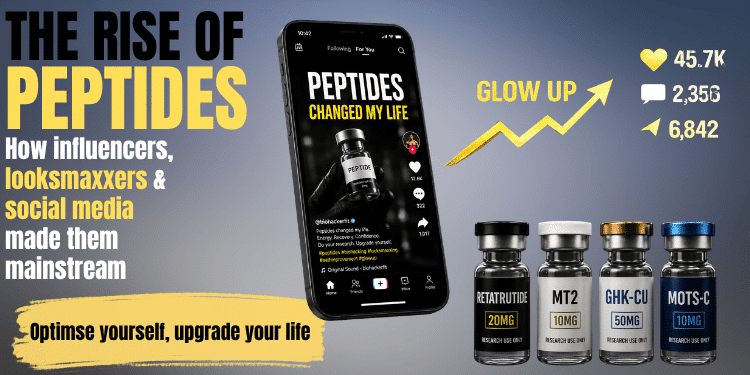
TikTok clips talking about “glow ups”, YouTube creators documenting dramatic weight loss journeys, fitness influencers discussing recovery stacks, looksmaxxing communities obsessing over skin quality and tanning, suddenly compounds like retatrutide, GHK-Cu, MOTS-C and Melanotan 2 are being mentioned by people who would never have touched these conversations five years ago.
Social media has completely changed the way people view aesthetics, health and self improvement. Whether that is a good thing or a bad thing depends on who you ask, but one thing is obvious, peptides have gone mainstream.
The Rise of Looksmaxxing Culture
A huge part of this shift comes from the rise of looksmaxxing culture online.
For anyone unfamiliar with the term, looksmaxxing basically refers to improving your appearance as much as possible through grooming, fitness, skincare, hair, body composition and overall aesthetics. Some people approach it casually, others treat it like a full time project.
Platforms like TikTok, Instagram and YouTube Shorts have pushed this even further. Every day people are flooded with transformation videos, skincare routines, “what changed my face” posts and influencer content focused around appearance optimisation.
The result is that more people are now actively searching for ways to improve:
- Skin quality
- Hair health
- Body fat levels
- Recovery
- Energy
- Sleep
- Muscle tone
- Tanning and complexion
This is where peptides started getting serious attention.
Influencers Have Changed Public Opinion on Peptides
One of the biggest reasons peptides exploded in popularity is simple, influencers made them look normal.
Years ago, discussing performance compounds or experimental peptides online felt underground. Now you have fitness creators casually talking about GLP-1 compounds, biohackers discussing longevity stacks and skincare influencers promoting copper peptides without most viewers even realising they are talking about peptide science.
When millions of people repeatedly hear certain compounds mentioned, curiosity naturally grows.
Someone watches a creator lose a huge amount of body fat. Another sees a skincare influencer with unreal skin quality talking about copper peptides. Another watches a podcast discussing metabolic health and recovery optimisation.
Eventually people start researching for themselves.
Social media has basically accelerated the spread of peptide information faster than ever before. The downside is that misinformation spreads just as quickly, but there is no denying the influence these creators have had on public perception.
Retatrutide and the Obsession With Fat Loss
Few compounds have generated as much hype recently as retatrutide.
Part of the reason is because society has become obsessed with rapid body transformations. Lean physiques now dominate social media algorithms. The pressure to stay in shape is probably higher than it has ever been, especially online.
Retatrutide entered the conversation because of its potential effects on appetite regulation, body fat reduction and metabolic function. Even outside fitness communities, people started hearing about newer generation weight management peptides thanks to viral transformation content and celebrity speculation.
A lot of people who would never previously research peptides are now actively searching for compounds connected to:
- Weight management
- Appetite control
- Metabolic support
- Improved body composition
This is one of the clearest examples of how influencer culture directly drives public interest. Once dramatic before and after results begin circulating online, interest spreads incredibly quickly.
Why GHK-Cu Became Popular in Skincare Communities
GHK-Cu has become especially popular with people focused on skin quality, anti ageing and overall appearance enhancement.
Unlike some compounds that became popular through bodybuilding spaces, GHK-Cu exploded more through skincare and aesthetic communities. Social media has created massive interest in concepts like “glass skin”, collagen support and maintaining a youthful appearance.
People are paying more attention to skin than ever before.
That naturally pushed more users towards ingredients and peptides associated with skin rejuvenation and recovery. Influencers discussing skin texture, fine lines, hair quality and healing all helped increase awareness around copper peptides.
The interesting thing is that many people using skincare products containing peptide ingredients probably do not even realise how much peptide science has entered mainstream beauty culture already.
MOTS-C and the Biohacking Crowd
MOTS-C became popular for slightly different reasons.
This peptide gained traction largely through biohacking communities focused on energy, performance, longevity and metabolic efficiency. Podcasts, optimisation channels and health influencers played a huge role in exposing more people to concepts that previously felt extremely niche.
Modern self improvement culture is no longer just about looking better. People also want to:
- Feel sharper
- Improve energy
- Recover faster
- Sleep better
- Extend longevity
- Improve physical output
That mentality made compounds like MOTS-C naturally appealing to people already interested in performance optimisation.
Again, social media massively accelerated awareness. Once influential creators begin discussing “mitochondrial health” or metabolic optimisation, viewers inevitably start researching the compounds connected to those ideas.
Melanotan 2, Tanning Culture and Aesthetic Trends
Melanotan 2, often shortened to MT2, has probably one of the strongest connections to looksmaxxing culture specifically.
Appearance trends have always influenced tanning culture. A darker complexion is often associated with healthier skin tone, sharper facial contrast and improved aesthetics overall. Social media intensified this massively.
Instagram especially pushed heavily curated aesthetic lifestyles for years. Bronzed skin, beach photos, fitness content and ultra polished appearances became part of influencer culture online.
That naturally increased interest in tanning methods.
MT2 became widely discussed because many users viewed it as a way to develop a darker tan more efficiently compared to excessive sun exposure or sunbeds alone. Within looksmaxxing communities, people frequently discuss how skin tone can affect perceived attractiveness, facial contrast and overall appearance.
Redheaded individuals and people with very fair complexions also became increasingly interested in MT2 discussions online due to reports of changes in tanning ability and pigmentation response.
Social media played a huge role here too. Before platforms like TikTok and Instagram, most average people would probably never encounter discussions about melanocortin peptides. Now clips discussing tanning routines, peptide stacks and aesthetic optimisation regularly reach millions of views.
The Positive and Negative Side of Peptide Popularity
There are definitely positives to peptides becoming more widely discussed.
More people are taking interest in:
- Health optimisation
- Skincare
- Recovery
- Longevity
- Body composition
- Preventative wellness
People are also far more educated about topics that previously felt inaccessible.
At the same time, social media has created unrealistic expectations around transformation culture. A lot of content makes dramatic changes look instant or effortless when reality is usually far more complicated.
Another issue is that viral content often oversimplifies compounds without properly discussing risks, side effects or the importance of responsible research.
Peptides are constantly presented online as part of “perfect lifestyle” content, but many influencers only show the highlights. What viewers often do not see is the discipline around training, diet, sleep and consistency that usually exists alongside these compounds.
Why Peptides Are Probably Here to Stay
At this point, peptides are no longer underground.
The combination of influencer culture, aesthetics, looksmaxxing, fitness trends and biohacking has pushed these conversations directly into the mainstream. Millions of people are now actively researching compounds that most people had never even heard of a decade ago.
Whether the discussion revolves around:
- Retatrutide and body composition
- GHK-Cu and skin quality
- MOTS-C and performance
- MT2 and tanning
…the common theme is optimisation.
Modern internet culture is obsessed with self improvement, appearance and performance. Peptides fit directly into that world, which is exactly why interest keeps growing year after year.
And realistically, social media is only going to push that trend even further.